Industrial facilities regularly perform tasks that carry significant risk. Activities such as hot work, confined space entry, electrical maintenance, and equipment shutdowns are essential to operations, but they also introduce hazards that must be carefully managed.
In many facilities, these overlapping activities involve maintenance, engineering, contractors, operations, and EHS leaders. Without structured coordination, it becomes difficult to ensure that hazards are understood, work is properly authorized, and workplace safety controls remain in place.
To address these challenges, many organizations have adopted Control of Work (CoW) programs. Control of Work provides a structured approach for planning, authorizing, coordinating, and monitoring high-risk activities. When implemented effectively and managed using purpose-built Control of Work software, it helps organizations improve safety performance, mitigate risk, and enhance operational efficiency.
What Is Control of Work?
Control of Work is a governance framework used to manage hazardous or safety-critical work activities. It ensures that work is properly planned, evaluated for risk, authorized by qualified personnel, and executed under controlled conditions.
Rather than being a single tool or application, Control of Work is a combination of processes and safety procedures designed to make hazardous work consistent, visible, and auditable.
A typical Control of Work system may include:
- Permit to Work (PTW) systems for hazardous activities
- Job Safety Analysis (JSA) or job hazard analysis tools
- Isolation plans and energy control procedures, such as Lockout/Tagout (LOTO)
- Coordination of simultaneous operations (SIMOPS)
- Contractor work authorization and oversight
- Documentation and audit trails for safety compliance
Together, these elements help organizations maintain visibility into high-risk activities while ensuring that appropriate safeguards are in place before work begins.
Control of Work vs. Permit to Work: What’s the Difference?
Many people confuse Control of Work with a Permit to Work system. While related, they are not the same.
| Permit to Work | Control of Work | |
| Scope | Authorizes specific hazardous tasks | Governs the entire work management process |
| Focus | Individual work activities | All high-risk work across a facility |
| Format | Often paper- or form-based | Combines permits, risk assessments, isolation, and oversight |
In short, a Permit to Work is one component of a broader Control of Work system, which provides the framework for managing all work safely and efficiently.
Why Control of Work Is Critical in High-Risk Industrial Environments
Interest in Control of Work has grown significantly, particularly in industries with complex operations and elevated safety risks.
Key drivers include:
- Increasing operational complexity Facilities must balance ongoing production with maintenance, upgrades, and contractor work occurring simultaneously. Without coordination, these overlapping activities can introduce unexpected hazards and increase the likelihood of serious incidents.
- Contractor workforce expansion Contractors often perform specialized high-risk tasks. Organizations need clear safety protocols to ensure contractors follow the same safety standards as internal teams.
- Regulatory and liability pressures Investigations of incidents often reveal breakdowns in work authorization, hazard identification, or communication. CoW programs help organizations ensure compliance and show that proper work procedures and oversight were in place. The Bhopal disaster remains a stark reminder of what can happen when critical controls fail.
- Need for auditable safety processes Organizations must be able to show that hazardous work was properly managed, authorized, and monitored. Managing safety across a facility requires documentation that stands up to regulatory scrutiny.
Industries where CoW is most commonly implemented include oil and gas, chemicals, heavy manufacturing, energy and utilities, and mining.
The Relationship Between Control of Work and Process Safety Management
Control of Work does not operate in isolation. In many high-hazard industries, it functions as an operational layer within a broader Process Safety Management (PSM) framework — though CoW programs provide value across a wide range of industrial environments, regardless of whether formal PSM requirements apply.
PSM provides the regulatory and structural foundation, covering hazard analysis, mechanical integrity, emergency planning, and safe work practices, while Control of Work governs the day-to-day execution of hazardous tasks within that framework. Organizations subject to OSHA’s PSM standard (29 CFR 1910.119) or EPA’s Risk Management Program (40 CFR 68) will recognize permit to work and contractor management requirements as core elements of both programs.
Treating CoW as a standalone process disconnected from the broader regulatory and risk context creates gaps. When work authorization procedures are designed to support the specific hazards, compliance obligations, and operational risks present in a facility, whether or not PSM applies, organizations gain both operational control and regulatory defensibility.
Key Components of an Effective Control of Work System
While implementations vary, most successful CoW programs include several core elements.
Permit to Work
Permits formally authorize hazardous work before it begins, ensuring that risks are evaluated and controls are in place.
Common permit types include:
- Hot work permits
- Confined space entry permits
- Electrical work permits
- Line breaking permits
- Work at height permits
Permits create accountability and a formal record that work was properly planned and authorized. Furthermore, a digital permit management system can reduce the administrative burden and establish a proactive management system for outlining these critical processes and understanding the associated risks.
Job Safety Analysis and Risk Assessment
Before performing hazardous work, teams should evaluate potential risks and define mitigation measures. Job Safety Analysis (JSA), job hazard analysis, and similar risk management tools ensure workers understand what they will do and how to do it safely. These assessments are a core part of effective safety procedures and help prevent incidents before work begins.
Isolation and Lockout/Tagout
Maintenance and repair often require equipment or systems to be safely isolated. Lockout/Tagout procedures prevent unexpected energy release or equipment startup by requiring the isolation of all hazardous energy sources, including electrical, hydraulic, pneumatic, thermal, chemical, and kinetic, protecting workers from the full range of energies that can cause serious injury if released unexpectedly.
Coordination of Simultaneous Operations (SIMOPS)
SIMOPS occurs when multiple work activities overlap within the same facility, creating potential conflicts or hazards.
Examples include:
- Hot work near flammable materials
- Maintenance during active production
- Contractor work near energized systems
A Control of Work system ensures visibility across all ongoing activities, allowing conflicts to be identified and mitigated before work begins.
Authorization and Accountability
Clear roles are essential. Safety officers, supervisors, and workers must understand who reviews risks, authorizes work, and monitors progress. Documented authorization steps help ensure that work is performed under appropriate oversight and accountability.
Management of Change and Control of Work
One of the most significant gaps in CoW programs occurs when the scope of work changes mid-execution. A modification to equipment, a process parameter adjustment, or a shift in work method can each introduce new potential hazards that the original permit did not account for.
This is where Management of Change (MOC) becomes a critical companion to Control of Work. MOC provides the structured process for evaluating, approving, and documenting changes before they are implemented. When CoW and MOC are integrated, any deviation from the original work scope triggers a formal review, preventing the kind of unreviewed changes that frequently appear in incident investigations.
Organizations that manage CoW and MOC in disconnected systems introduce risk at the handoff. A single platform that links work permits to change records creates a continuous chain of authorization and documentation, improving safety management across the facility.
Incident Management: Learning From What Goes Wrong
Even well-designed Control of Work programs encounter incidents. Equipment failures, near misses, and procedural deviations are data points, and organizations that treat them as such build safer operations over time.
Effective EHS incident management connects what happened to how work was authorized. When an incident occurs during a permitted task, root cause analysis should examine the permit management process itself: Was the hazard identified? Were controls adequate? Was the work scope properly defined?
Linking incident records to work permits and job safety analyses closes the learning loop. Patterns become visible, including repeat failures in specific work types, gaps in hazard identification for particular permit categories, and breakdown points in the authorization chain. Organizations that integrate incident management with Control of Work software convert individual events into systemic improvements, which is the foundation of meaningful continuous improvement in safety performance.
Control of Work Best Practices
Organizations implementing CoW programs often follow these best practices:
- Standardize processes: Create consistent work procedures for permits, approvals, and risk assessments, along with safety checklists that support field execution
- Define clear roles: Ensure everyone knows their responsibilities in work authorization and monitoring
- Centralize documentation: Store permits, inspections, and safety records in a single system for complete visibility and audit readiness
- Enable field visibility: Supervisors and safety teams should have real-time visibility into what work is occurring across areas and facilities
- Capture incidents and lessons learned: Link work activities to incident investigations and corrective actions to strengthen safety protocols over time
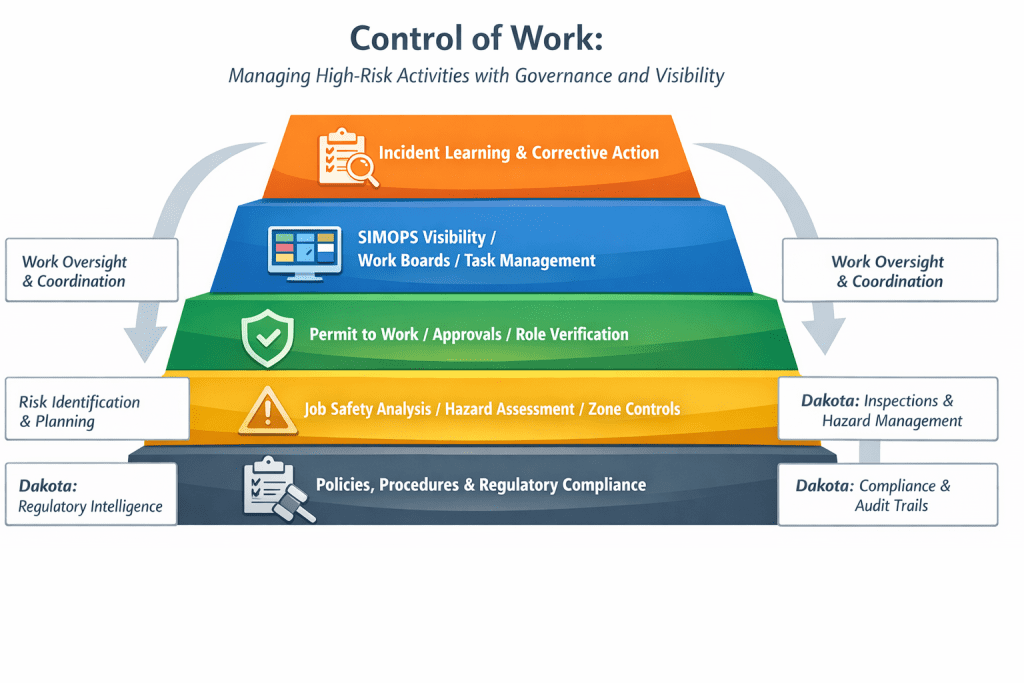
The Role of Digital Tools in Control of Work
Many organizations still rely on paper forms or disconnected spreadsheets to manage hazardous work. As operations grow more complex, manual systems can become inefficient, inconsistent, and difficult to audit.
Digital tools purpose-built for Control of Work can help organizations:
- Standardize work authorization workflows and safety procedures
- Track corrective actions and open tasks
- Document inspections, permits, and hazard controls
- Provide real-time insights into ongoing work across facilities
By improving consistency and accountability, Control of Work software makes it significantly easier to implement a robust safety management framework and enhance compliance assurance across the organization.
Safety Audits and the Auditability of Control of Work
A Control of Work system is only as strong as the evidence it produces. When a regulator, insurer, or internal review team examines how hazardous work was managed, the question is not whether a process existed. It is whether that process was followed consistently and can be demonstrated.
Safety audits of CoW programs typically examine permit records, authorization chains, risk assessments, and closure documentation. Audit findings frequently reveal gaps in how permits were completed, whether hazard controls were verified before work began, and whether incidents were linked back to specific work activities.
Organizations that structure their CoW documentation with audit readiness in mind, maintaining complete records, clear authorization histories, and closed-loop corrective actions, are better positioned to demonstrate compliance and identify gaps before an audit reveals them.
Strengthening Control of Work Through Risk Governance
While many CoW platforms focus on operational coordination, Dakota Software strengthens the governance and regulatory compliance layer behind these processes.
Dakota helps organizations:
- Identify safety regulations tied to hazardous work
- Structure inspections and verification processes
- Manage corrective actions and follow-up tasks
- Capture incidents and analyze root causes
- Maintain auditable documentation to ensure compliance with applicable safety standards
This positions Dakota as supporting governed Control of Work integrated with regulatory intelligence and incident learning, emphasizing risk visibility and compliance defensibility rather than operational execution alone.
Conclusion: Enhance Safety and Ensure Compliance with Control of Work Software
Control of Work provides a structured approach to managing hazardous activities in high-risk environments. By combining operational risk management, work authorization, documentation, and operational safety coordination, organizations can reduce the likelihood of serious incidents while maintaining operational efficiency.
Effective CoW programs do not function in isolation. When linked to Process Safety Management requirements, Management of Change procedures, incident reporting systems, and structured safety audits, they become part of a continuous safety governance framework where what is planned, what changes, what goes wrong, and what is verified are all connected.
Control of Work software, coupled with structured governance, ensure that work is performed safely, deliberately, and in alignment with established safety protocols. When organizations pair operational work controls with regulatory intelligence and incident learning, they build a safety program that is effective in the field, auditable under scrutiny, and designed for continuous improvement over time.